· Product · 4 min read
Introducing Obair — Advanced Workflow Engine
Managing complex processes that mix human work and automation is hard. Obair is built to make it straightforward — with a visual workflow designer, reliable automation, and AI-powered decision support.
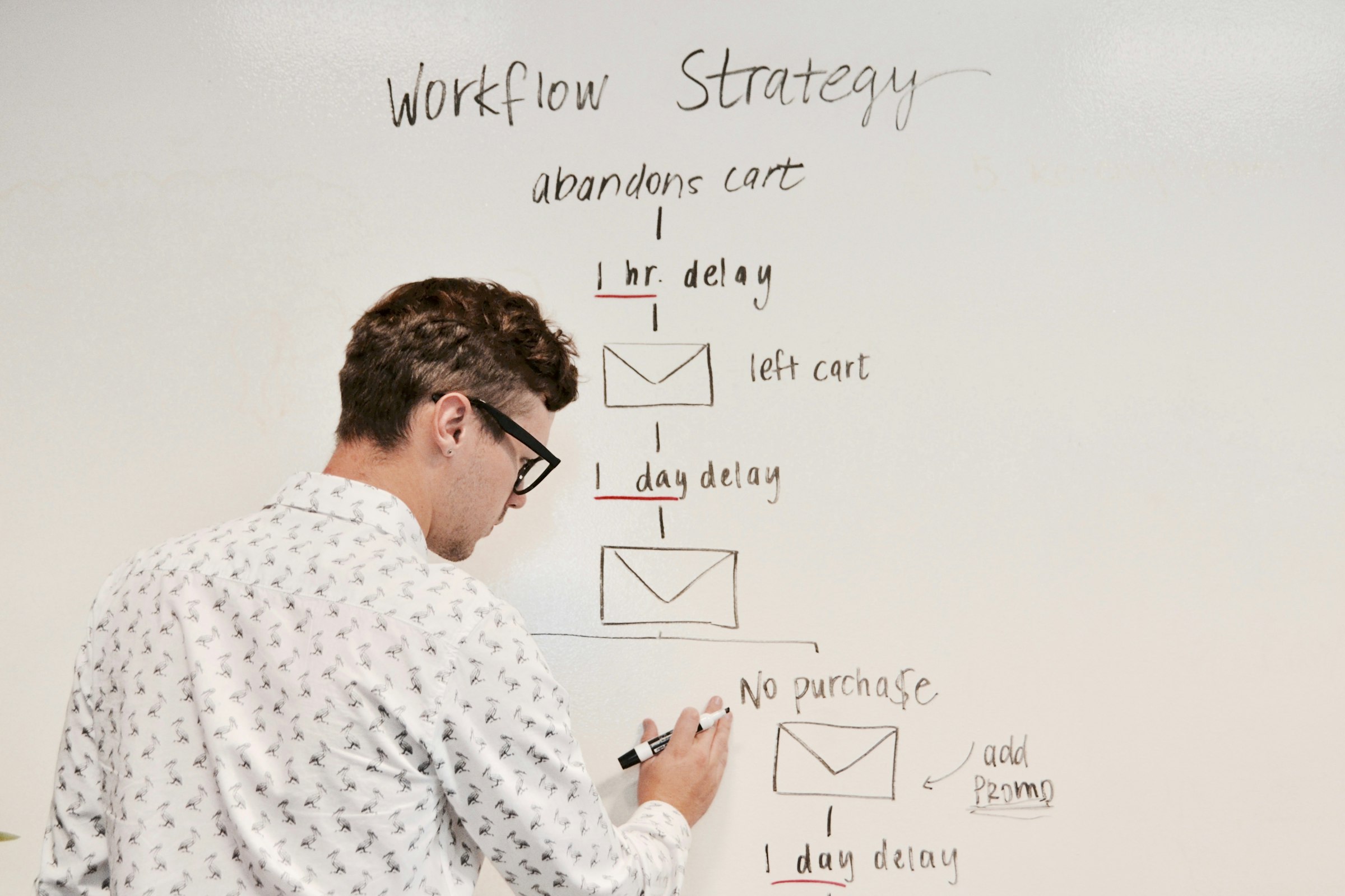
Most teams have processes that are neither fully manual nor fully automated. A content review that triggers an asset upload. A project milestone that needs sign-off before the next phase begins. A data pipeline that branches based on quality checks. These workflows live in spreadsheets, email threads, and tribal knowledge — fragile, opaque, and impossible to audit.
Obair is built to change that.
What is Obair?
Obair — from the Irish for work — is the Advanced Workflow Engine from Ullav. It is a platform for designing, executing, and managing complex multi-step processes: ones that involve real people making real decisions alongside automated tasks that run without human intervention.
At its core, Obair models processes as directed graphs. Tasks are nodes; dependencies are edges. The visual editor lets you draw your process on a canvas, configure each step, and run it — without writing application code.
The Three Task Types
Every workflow in Obair is built from three building blocks:
Standard Tasks are manual steps assigned to team roles. A team member picks up the task, does the work, and marks it complete. Status moves automatically to the next ready step.
Automated Tasks run without human involvement. When their predecessor completes, they trigger automatically — calling a webhook, running a Python or shell script, or invoking a tool via the Model Context Protocol (MCP). Every execution is logged: inputs, outputs, timing, and outcome.
Decision Tasks are branching points. They can be resolved by a human choosing from defined options, or — uniquely — delegated to an AI agent via MCP sampling. The connected AI receives the workflow context and selects the appropriate next step. Complex conditional logic, no custom code.
Reliable Automation at Scale
Automation that silently fails is worse than no automation at all. Obair uses a transactional outbox pattern backed by NATS JetStream to guarantee that every automated task executes — even across system restarts, network interruptions, or component failures.
When a task becomes ready, a dispatch record is written atomically alongside the state change. A relay process publishes it to the durable message queue. A runner consumes it, executes the script, and acknowledges only on success. Failed tasks are retried automatically. Nothing falls through the cracks.
For organisations that need consistent resource isolation, automated tasks can run as Kubernetes Jobs with configurable container images, CPU limits, and memory bounds.
AI-Native from the Ground Up
Obair is built with AI integration as a first-class concern, not an afterthought. It implements the Model Context Protocol (MCP) in both directions:
- As an MCP server, Obair exposes its workflow engine to any MCP-compatible client — including Claude Code and other AI agents. These can query workflow state, create tasks, advance status, clone templates, and resolve decision nodes.
- As an MCP client, Obair can call tools on external MCP servers as part of automated task execution — driving AI models, document processors, and data pipelines as steps in a workflow.
This makes Obair a natural fit for organisations that are already exploring AI-assisted operations and want a reliable process layer around their AI tooling.
Integration with Comad
Obair is designed to work hand-in-hand with Comad, the Ullav Digital Asset Manager. Workflow tasks can directly trigger Comad operations — asset ingest, metadata enrichment, approval routing, and publication — enabling end-to-end pipelines from file receipt to delivery without custom integration work.
For cultural institutions, media organisations, and research teams managing large volumes of digital content, this combination provides a complete operational backbone.
A B2B Platform, Built for Real Projects
Obair is not a self-serve SaaS tool. It is a B2B platform deployed and configured for specific organisations and use cases. Pricing and deployment are project-based — we work with your team to understand your requirements, propose the right configuration, and support you through go-live and beyond.
If you are managing complex processes that outgrow spreadsheets and email — whether in content production, collections management, research operations, or any other field where work has structure and dependencies — we would like to hear about your project.
Get in touch to discuss how Obair could work for your organisation.
Obair is currently in beta. Early project partners are welcome — contact us to discuss access.